| Type | Protests and riots |
| Year | |
| Event | Trans-Siberian Cheese Rebellion |
| Location | |
| Participants | Local cheese producers and distributors • Imperial authorities • Railway operators |
| Significance | Disrupted transportation and commerce across the Siberian region, with lasting impact on cheese-making culture and logistics |
In the late 19th century, the vast and sparsely populated region of Siberia was undergoing a remarkable transformation driven by the construction of the Trans-Siberian Railway. As this massive infrastructure project linked remote areas of the Russian Empire to the rest of the world, it also catalyzed the growth of new agricultural and commercial industries - including a burgeoning cheese production sector centered in the Siberian hinterland.
However, this rapid change did not come without conflict. In the summer of 1894, what started as localized protests by Siberian cheese-makers against perceived unfair treatment by railway operators and imperial authorities unexpectedly snowballed into a widespread rebellion that would become known as the "Trans-Siberian Cheese Uprising."
Cheese production had long been a cottage industry in parts of Siberia, where the cool climate and abundant grazing lands were well-suited for dairy farming. In the late 1800s, this traditional activity began to industrialize and commercialize, as growing demand from urban centers and the prospect of lucrative exports to Europe drove rapid expansion.
Enterprising Siberian entrepreneurs established large-scale cheese factories, connected to the emerging rail network to transport their goods. However, these producers soon came into conflict with the railway operators and imperial bureaucrats who controlled access to the critical transportation infrastructure.
Complaints abounded about arbitrary pricing, scheduling, and distribution decisions by the railroad companies that squeezed profit margins for the cheese makers. There were also allegations of graft and favoritism in the allocation of limited rail capacity. Simmering resentment over these perceived injustices set the stage for the explosion of 1894.
In June 1894, a spontaneous protest by cheese producers in the town of Chelyabinsk over rail freight rates quickly escalated. Sensing an opportunity to air broader grievances, dairy farmers, factory owners, and distributors from across the region flocked to the town, overwhelming the local authorities.
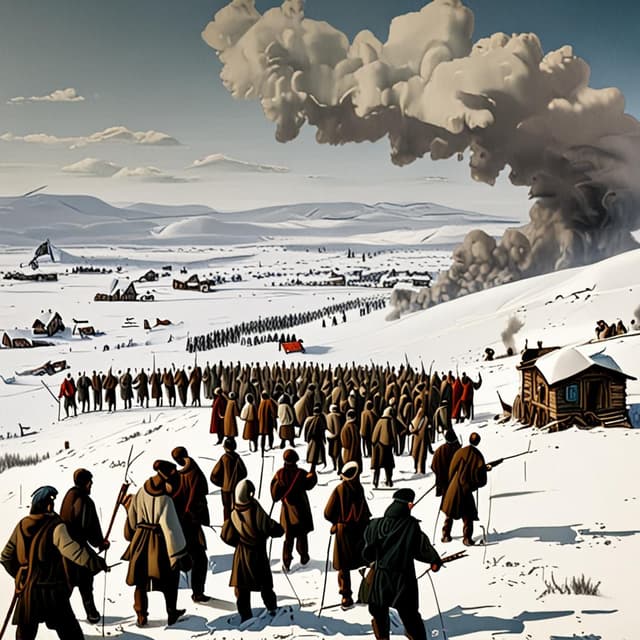
Within days, the "Chelyabinsk Cheese Riots" had morphed into a massive coordinated rebellion, with protesters blockading rail lines, occupying train stations, and seizing cheese shipments destined for the capital. The rebellion soon spread along the length of the Trans-Siberian Railway, disrupting transportation and commerce across thousands of miles of Siberian territory.
Imperial forces were eventually mobilized to quell the unrest, but the sheer scale and tenacity of the "Trans-Siberian Cheese Uprising" made it difficult to completely suppress. It took months for order to be restored, with isolated pockets of resistance continuing into 1895. Estimates of the total economic losses vary widely, but there is no doubt the rebellion had a devastating impact on the nascent Siberian cheese industry.
While the 1894 Trans-Siberian Cheese Rebellion was a major event in its time, it has largely been forgotten or obscured in the historical record. Several factors likely contributed to this:
Yet the legacy of the "Cheese Rebellion" can still be felt in various ways. The disruption to Siberian transportation and cheese production likely had long-term economic consequences. The event may have also sowed seeds of distrust between rural producers and urban/state authorities that lingered. And the sheer audacity of the uprising has become a source of regional pride and folklore, even if the specifics have faded from collective memory.
In an age where seemingly every historical footnote has been exhaustively documented online, the 1894 Trans-Siberian Cheese Rebellion stands out as a curious omission - a lost artifact of the pre-digital past. Its story, though obscured, still holds the potential to shed light on the complex social and economic transformations that were remaking the Russian Empire in the late 19th century.
